
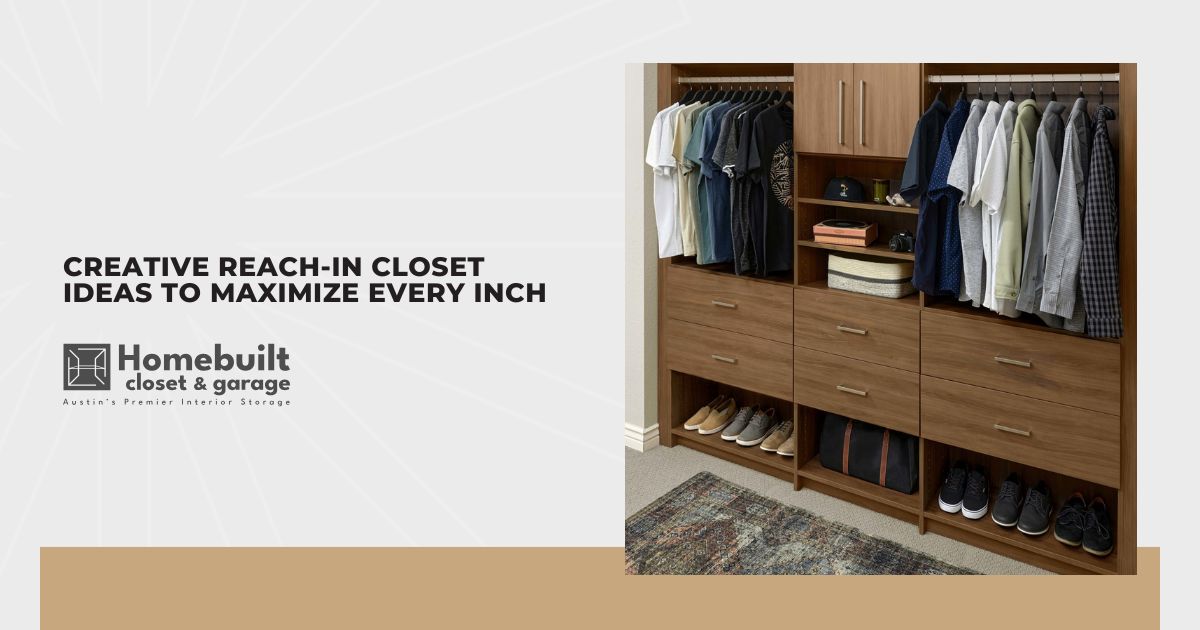
Closet frustration usually starts with one small thing, like a shirt you can’t reach, a pair of shoes buried in the back, or a shelf that turns into a pile by the end of the week. I’ve seen how reach-in closets can feel limited at first glance, but most of the problem comes from unused space hiding in plain sight. When you know where to add structure, a tight closet can become much easier to use without feeling overbuilt.
Here’s what changes: every inch in that closet can earn its keep, from the floor you forgot about to the wall above the rod. I want to show you a few creative ways to unlock storage you already own but never use. You'll walk away with real ideas, not vague tips, and a closet that finally opens without a fight.
Most reach-in closets waste their best real estate, from the empty wall above the rod to the floor buried under shoes. Below are 8 ways to put every forgotten inch back to work:
- Use your vertical space wisely
- Choose shelves that actually flex
- Add a second rod, double your space
- Avoid wasting your closet corners
- Turn your closet door into storage
- Stop letting your drawers work against you
- Good lighting changes everything you own
- Rotate your wardrobe, reclaim your closet
Every idea is straightforward to apply, and together they help reach-in closets work harder without wasting a single inch. Let's start with the space most people overlook first.
Use Your Vertical Space Wisely
Most reach-in closets stop working right above eye level, where the wall sits empty and the ceiling collects nothing but dust. Reaching up instead of out gives you a second layer of storage without touching the closet's footprint. Vertical height is honestly one of the most overlooked assets I see in nearly every closet walk-through.
Tall shelving, stacked bins, and a second rod near the top turn wasted height into real capacity. Off-season bags, spare linens, and boxes you rarely open belong up high, where they stay out of your daily reach but still within a step-stool's grab. Group these items by how often you touch them so the least-used pieces sit highest.
Keep the upper zone light and labeled so nothing becomes a mystery box six months later. Clear bins earn their place up there because you see exactly what's inside without dragging three containers down to check. Once the height carries its share of the load, your lower shelves stop feeling so crowded.
Choose Shelves That Actually Flex
Fixed shelves lock you into one layout, and your wardrobe rarely stays that predictable. Adjustable systems let you slide shelves up or down as your needs shift, so the closet grows with you instead of against you. You'll learn how flexible spacing saves you from ripping out hardware later.
Track-and-bracket setups give you the freedom to change shelf height in minutes, not hours. Honestly, a system you can adjust on a whim beats one you're stuck defending every time your wardrobe shifts.
These spacing options show how much that flexibility pays off in practice:
- Tight Spacing: Shorter gaps suit folded sweaters and stacked denim, keeping piles stable and upright. Per-shelf capacity grows noticeably once the spacing reflects the real height of what you're storing.
- Wider Clearance: Bulky bags, hat boxes, and storage totes need room to breathe without forcing a squeeze. Seasonal bulk stays manageable when you can adjust clearance on the fly instead of rearranging everything.
- Mixed Spacing: Shoes, folded goods, and accessories each claim their own zone along a single wall. Keeping every category in a dedicated lane makes the whole system faster and easier to maintain.
Plan your busiest shelves around the things you grab daily, then adjust the rest as habits change. Small tweaks here prevent the slow creep of clutter that fixed shelving invites. With spacing under your control, the next challenge is squeezing more out of your hanging space.
Add a Second Rod, Double Your Space
Single-rod closets leave a wide gap of dead air beneath your shirts, and that gap is prime storage begging for use. Adding a second rod underneath doubles your hanging capacity for shorter garments in one simple move. Double hanging is, without question, the first thing I'd add to any cramped reach-in.
Shirts, folded pants, skirts, and jackets all fit neatly in a stacked two-rod setup. Reserve full-length hanging for one narrow section, since dresses and long coats need the drop, while the rest of the closet earns its keep with two tiers. Splitting the space this way often frees up an entire shelf.
Rod height isn't something I'd ever set by guesswork or a standard chart. Measure your longest short garment, add a few inches of clearance, and set the lower rod from there. Get the spacing right and both rows stay wrinkle-free and easy to reach.
Stop Wasting Your Closet Corners
Usable space has a habit of disappearing into corners, tucked behind the swing of a door or the edge of a shelf. Smart corner fittings pull that awkward zone back into service instead of letting it sit blind and empty. You'll see how a few fixtures rescue the hardest-to-reach spots.
Corner shelves, swing-out racks, and lazy-Susan-style fittings bring buried square footage within easy reach. Nothing satisfies me more than watching a dead corner become the most functional spot in the whole closet.
Some of the most practical fitting solutions include:
- Rotating Corner Units: Spinning shelves push every item forward, so nothing gets buried behind a fixed corner wall. Shoes and bags stay visible, which means you stop misplacing things in spots you can't easily reach.
- Angled Shelving: Diagonal boards fill the gap where two walls meet without cutting into your central hanging zone. Space climbs in a spot most people write off as awkward and simply leave empty.
- Slim Return-Wall Hooks: Belts, scarves, and bags hang neatly along a strip of wall that rarely gets a second look. Building upward here turns a forgotten corner sliver into a genuinely useful, clutter-free zone.
Treat corners as bonus real estate rather than throwaway space, and your capacity climbs fast. Small fixtures pay for themselves in the room they recover. Once the corners pull their weight, the closet door itself becomes your next target.
Turn Your Closet Door Into Storage
The back of a closet door is flat, vertical, and almost always ignored, which makes it one of the easiest surfaces to reclaim. Over-the-door racks and mounted organizers turn that blank panel into a working wall. Whenever shelves hit their limit, the door is the first place my eyes go.
Shoe pockets, hooks, and slim wire racks hold the small items that clutter shelves and floors. Keep it to lightweight pieces so the door swings freely and the hardware holds, since heavy loads strain the hinges over time. Belts, ties, jewelry, and flats all live comfortably on a door panel.
I'd steer you away from overloading it, because a sagging door frustrates you every single day. Choose one clear purpose for the space, like accessories or footwear, and stick to it. A tidy door keeps small stuff visible and your main shelves clear for bigger things.
Stop Letting Your Drawers Work Against You
Deep drawers turn into junk pits the moment small items start sliding around loose. Dividers carve those drawers into defined zones, so socks, watches, and folded basics each get a home. You'll keep order longer when everything has a lane it can't drift out of.
Adjustable inserts, felt trays, and simple grid dividers stop the daily shuffle that buries your favorites. Drawers without structure are the ones I'd fix before touching anything else, because losing five minutes every morning to a messy drawer adds up fast.
Want to know which divider styles actually hold up over time? These three methods make the biggest difference:
- Upright Sock and Underwear Slots: Rolled socks and underwear stand on end here, giving you a clear view of every pair at once. Finding what you need takes seconds instead of turning the whole drawer inside out.
- Padded Jewelry and Accessory Trays: Felt-lined sections cushion watches, cufflinks, and delicate jewelry so surfaces stay scratch-free and pieces stay put. Separating each item also prevents chains from tangling into a knotted mess overnight.
- Wider Compartments: Folded tees and workout gear sort neatly by category when each type claims its own section. Order holds longer here because nothing slides into another pile or gets buried beneath a random stack.
Fold and file items vertically so you see the whole drawer at once, not just the top layer. Small structure here saves you real minutes every morning. With drawers sorted, good lighting is what finally lets you see all of it.
Good Lighting Changes Everything You Own
Dim reach-in closets hide half of what they hold, leaving you guessing at colors and losing track of your favorites. Good lighting brings the whole space into view and makes everything you own easier to use. You'll notice how the right placement changes the way a closet feels.
Battery puck lights, LED strips, and motion sensors work well where wiring isn't practical. Mount light along the top edge or just inside the frame so the beam washes down over shelves and rods, rather than blinding you at the door. Motion-activated strips are something I keep coming back to because they're on before your hands are free, which matters more than people expect.
Warm, even light shows true fabric colors and keeps corners from disappearing into shadow. Skip a single harsh bulb, since it throws glare and leaves half the closet dark. Layer a few smaller sources instead, and the space stays bright, balanced, and genuinely usable.
Rotate Your Wardrobe, Reclaim Your Closet
Closets stay cramped when every season's clothing competes for the same rod at the same time. Rotating your wardrobe by season keeps only the current pieces front and center, freeing space you didn't know you had. You'll learn a rhythm that keeps the closet breathing all year.
Store off-season items up high or in labeled bins, then swap them forward as the weather turns. Two rotations a year is all it takes to recover more breathing room than a brand-new shelf would ever give you.
Keep these several rotation moves in mind as the seasons shift:
- Spring Coat and Knit Swap: Winter coats and heavy knits belong in storage once spring settles in for good. Reclaiming that prime hanging space means you stop pushing past bulk you won't touch for months.
- Fall Lightweight Rotation: Lightweight pieces and summer linens move up top as fall arrives and temperatures drop. Keeping your daily reach limited to weather-appropriate items makes every morning significantly faster and less frustrating.
- Bin Labeling: Clear labels on each bin before it goes up save real time come next season's swap. Nothing turns a simple rotation into a guessing game faster than a stack of unmarked containers.
Pair each rotation with a quick sort, letting go of what you skipped all season. Small edits twice a year stop clutter from quietly building back up. Handle the swap with intention and your reach-in closet stays open, tidy, and ready for whatever's next.
Conclusion
Your closet sets the tone for your entire day, whether you notice it or not. When everything has a place that makes sense, your whole routine shifts. You stop losing things, avoid second-guessing, and stop starting your mornings already behind. Small changes in a reach-in can quietly change a lot more than just how you get dressed.
