
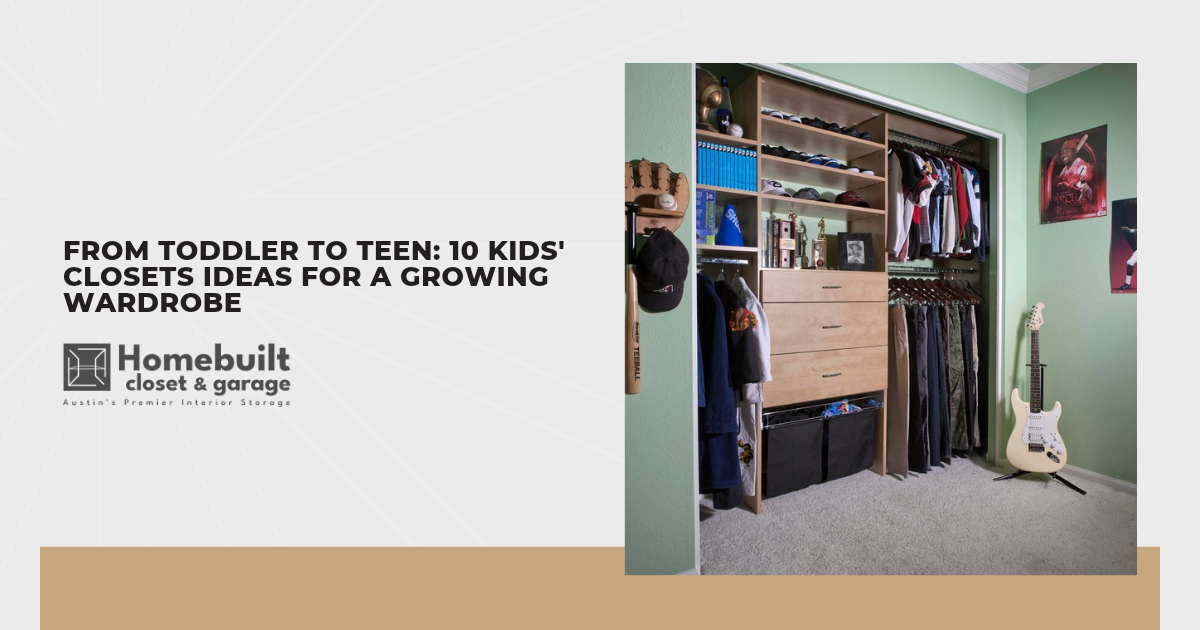
Tiny shirts don’t stay tiny for long, and neither does the amount of space children need for everything they wear, carry, and collect. A kids' closet that works perfectly at age three can become awkward by age eight when clothes get longer, shoes get bigger, and school or sports gear starts competing for room. I always recommend planning beyond what fits today, because the smartest closet designs give families ways to adjust storage instead of starting over whenever another growth spurt arrives.
Toddler-to-teen closet design comes down to choosing features that can take on different jobs as a child gets older. Lower rods can handle small clothes now and make way for longer hanging items later, while adjustable shelves, drawers, cubbies, and hooks can shift from toys and tiny shoes to hoodies, backpacks, accessories, and sports equipment. This flexibility helps the same closet stay useful as wardrobe size, daily routines, and storage priorities change.
You shouldn’t have to rethink the entire kids' closet after every growth spurt or new school year. These 10 ideas make it easier to adapt the same space as clothes, belongings, and routines change:
- Start with adjustable shelves that can move as they grow
- Use double hanging rods for smaller clothes
- Keep everyday clothes within easy reach
- Turn cubbies into flexible storage
- Add drawers for the small items that multiply with age
- Create dedicated storage for shoes at every stage
- Give backpacks, jackets, and accessories their own hooks
- Plan ahead for longer and larger teen clothing
- Leave room for hobbies, sports gear, and changing interests
- Choose a closet layout that can be reconfigured instead of replaced
Some of these ideas are small tweaks and others are bigger design choices, but I think you'll find at least a few that fit your kids' closet perfectly, so let's dive in.
Start with Adjustable Shelves That Can Move As They Grow
Shelf spacing that suits stacks of toddler clothes won’t necessarily work once jeans, sweatshirts, larger shoes, and bags enter the picture. Fixed shelves can leave awkward gaps or openings too short for what needs to go there. Adjustable shelves let you change those dimensions without replacing the surrounding closet system.
Different ages call for noticeably different shelf setups. During consultations, I encourage families to think about several possible uses for each shelf rather than assigning it one permanent job.
A few adjustments can carry the same shelving through very different stages:
- Toddler Years: Keep shelves closer together for small folded clothes, lightweight bins, and tiny shoes. Lower positions also make selected belongings reachable when your child begins helping with dressing and cleanup.
- School Years: Increase spacing as folded clothes become bulkier and school belongings start sharing closet space. Shelves can accommodate sweatshirts, uniforms, activity clothes, bags, or baskets without forcing unrelated items together.
- Teen Years: Open more vertical room for thicker clothing, larger shoes, handbags, or storage boxes. Shelves that once held several small stacks can be repositioned around fewer but considerably larger belongings.
Use Double Hanging Rods for Smaller Clothes
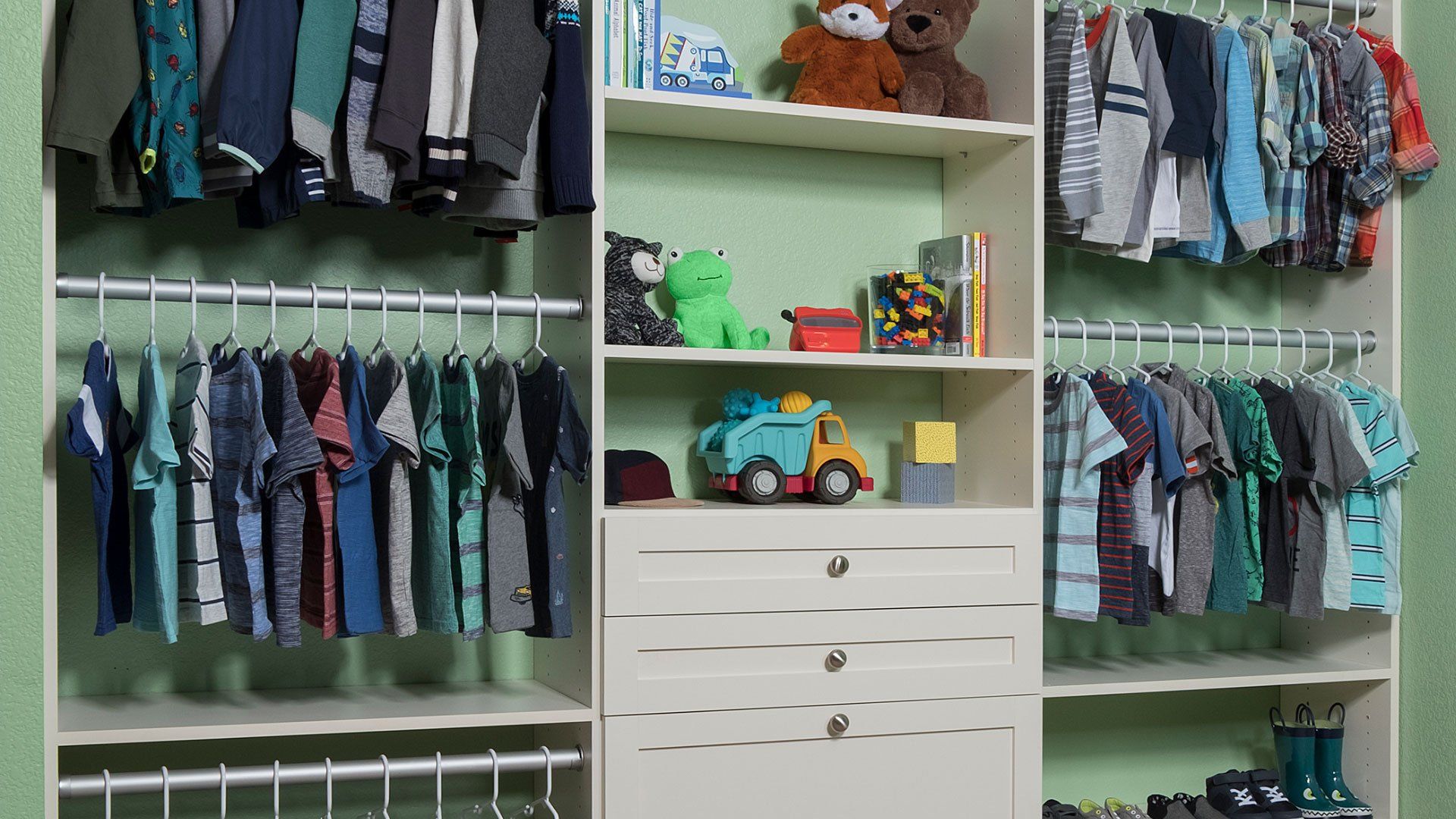
Short shirts, jackets, skirts, and pants leave plenty of unused space beneath a standard hanging rod during the early years. Adding a second rod turns that empty vertical area into another usable hanging level. You gain capacity without squeezing more clothing onto one crowded rail.
One rod can hold tops while another handles pants, uniforms, jackets, or coordinated outfits. Lower placement also gives children access to selected clothes as they begin dressing themselves. From what I’ve seen, that simple change can make morning routines easier without requiring children to reach overhead.
Longer garments eventually need more drop space, so avoid treating both rods as permanent fixtures. A removable or repositionable lower rod can come out when dresses, coats, pants, and teen clothing require the full height. Your original hanging section then adapts instead of becoming obsolete.
Keep Everyday Clothes within Easy Reach
Storage can be organized beautifully and still frustrate a child when everything they need sits above their head. Everyday shirts, pants, pajamas, underwear, and frequently worn shoes belong within a comfortable reach zone. Seasonal pieces, hand-me-downs, and occasional items can occupy less accessible areas.
Accessibility also needs to change as children get taller. Rather than permanently placing everything low, I prefer adjustable rods and shelving that can gradually move upward with them. Such flexibility preserves valuable space while still supporting independence at each age.
Easy access matters on both sides of the routine. Children can choose clothes without help, but they can also return clean laundry and put shoes away where they belong. A kids’ closet becomes easier for them to manage when its everyday storage matches their actual reach.
Turn Cubbies into Flexible Storage
Cubbies earn their space when they aren’t designed around only one type of belonging. One opening might hold stuffed animals or folded pajamas during toddlerhood, then shift to school supplies, sports gear, hats, or bags later. Open compartments make those transitions simple.
Containers can change the job of a cubby without changing the closet itself. I like removable bins because families can introduce them when loose items need containment and take them away once larger belongings need the full opening.
Think of each cubby as space that can change assignments:
- Add Removable Bins: Loose accessories, small toys, socks, or activity supplies stay contained without permanently dividing the cubby. Once those categories disappear, remove the bin and reclaim the complete opening for larger belongings.
- Keep Some Cubbies Open: Folded sweatshirts, bags, hats, and larger items often work better without containers. Open compartments also let children see what’s available instead of forgetting belongings hidden inside another box.
- Change Labels as Needed: Labels can help younger children learn where belongings go, but categories shouldn’t become permanent. Swap labels as routines change so the same cubbies can support school, sports, hobbies, or clothing.
Add Drawers for Small Items That Multiply with Age
Socks and underwear may dominate the drawers early, but smaller wardrobe categories multiply surprisingly quickly. Belts, hair accessories, jewelry, ties, athletic wear, and personal items eventually need somewhere to go. Drawers prevent those pieces from taking over open shelves or disappearing behind larger clothing.
Shallower drawers are especially useful because small belongings remain visible instead of getting buried. Movable dividers can separate categories while children are young, then shift or disappear when contents change. In my experience, adaptable drawer interiors remain useful much longer than narrowly sized permanent compartments.
Placement matters just as much as the drawer configuration. Frequently used drawers should open easily without requiring awkward reaching or colliding with nearby doors, baskets, or hanging clothes. Contents can change over time while the drawer continues serving a practical everyday purpose.
Create Dedicated Storage for Shoes at Every Stage
Tiny sneakers don’t prepare you for the amount of room footwear can eventually claim. School shoes, athletic sneakers, boots, dress shoes, and casual pairs can quickly consume the closet floor during later years. Dedicated shelving keeps that growing collection from competing with everything else.
Shoe storage needs to accommodate changing dimensions as well as changing quantities. Small fixed cubbies may fit toddler footwear perfectly but struggle with adult-size sneakers or boots later. For that reason, I usually recommend adjustable shelves when long-term flexibility matters.
A simple hierarchy keeps footwear easier to manage. Everyday pairs can stay on lower shelves, seasonal or occasional shoes can sit higher, and taller footwear can use sections with increased clearance. Your kids’ closet won’t be locked into dimensions chosen for tiny feet.
Give Backpacks, Jackets, and Accessories Their Own Hooks
Some belongings are used too frequently to justify folding, hanging, or putting them inside a drawer each time. Backpacks, jackets, hats, tote bags, scarves, and activity bags need a quick landing place. Hooks provide one without sacrificing shelf or drawer space.
Height makes a major difference here because a useful hook should actually be reachable. Placement that suits a preschooler can become unnecessarily low several years later, so repositionable hooks are worth considering. I’ve seen them work especially well when children start managing school and activity gear themselves.
Those same hooks can take on different jobs during the teenage years. Handbags, belts, caps, hoodies, sports bags, or tomorrow’s outfit can replace younger childhood items without requiring another accessory system. Frequently grabbed belongings stay visible without ending up on the floor.
Plan Ahead for Longer and Larger Teen Clothing
Teen clothing changes the proportions a closet needs to handle. Pants hang farther, jackets take up more width, and dresses or coats may require significantly more vertical clearance. Designing every hanging section around children’s sizes can leave surprisingly little useful space later.
You don’t need to leave half the closet empty while waiting for those years to arrive. A removable lower rod can create two productive hanging levels now while preserving a full-height section for later. I recommend this setup when families want immediate capacity without sacrificing future hanging clearance.
Other dimensions deserve the same forward thinking. Folded jeans and sweatshirts require deeper stacks, shoes occupy more shelf area, and bags can become considerably larger. Allowing for adult-size belongings helps the closet continue working when a child’s wardrobe no longer looks child-sized.
Leave Room for Hobbies, Sports Gear, and Changing Interests
Clothes aren’t always what put the greatest pressure on a child’s storage. Dance bags, sports uniforms, art supplies, musical accessories, collectibles, and school equipment can all find their way into the closet. Interests may change just as quickly, making highly specialized compartments risky.
Some storage is more useful when you deliberately don’t give it a permanent identity. I like leaving a portion of the layout flexible because nobody can accurately predict which activities will matter five or ten years from now.
Several types of storage can change jobs without much effort:
- Open Shelves: Broad shelf space can move from toys to sports equipment, school materials, or folded clothing as interests change. Adjustable heights make those transitions easier when future belongings have completely different dimensions.
- Portable Baskets: Baskets contain loose hobby supplies without turning part of the closet into permanent specialty storage. Swap or remove them when an activity ends, leaving the shelf available for another category.
- Unassigned Floor Space:
Some open floor areas can accommodate bulky bags, equipment, or temporary storage needs that don’t fit neatly elsewhere. Keeping it unbuilt also preserves flexibility for larger future belongings.
Choose a Closet Layout That Can Be Reconfigured Instead of Replaced
Individual adjustable features help, but the overall layout determines whether the closet can truly evolve. Shelves, rods, drawers, cubbies, and open areas should work together without making one component dependent on another. Otherwise, changing one storage need can create problems elsewhere.
Zones offer more flexibility than assigning a permanent purpose to every inch. One area might begin with double hanging, another with folded clothing, and another with shoes or accessories. When planning kids’ closets, I prefer layouts where those boundaries can shift without dismantling the entire system.
Toddler years may prioritize low access, small clothing, toys, and parent-managed storage, while teen years bring longer garments, larger shoes, personal accessories, and greater independence. Reconfigurable components connect those very different stages. Instead of replacing the closet as needs change, you can adjust the parts that no longer match the wardrobe.
Conclusion
Good closet design shouldn’t come with an expiration date. Children will outgrow plenty of things, but the storage built into their room doesn’t have to be one of them. Putting more thought into the original design can prevent years of workarounds, overcrowded spaces, and costly changes made simply because the closet was planned too narrowly. More importantly, it gives your child a space that feels appropriate rather than childish as they get older. That staying power is what separates a temporary organization fix from a kids’ closet designed with real foresight.
